Ingredients Worth a Second Look on Your Skincare Shelf
Ingredient lists are written for chemists, not for the woman standing in her bathroom at 10 p.m. wondering why her face stings. Some names on the back of the jar sound alarming and are perfectly harmless. Others sound gentle and are the reason your skin feels raw. Here's a calmer way to read a label, and the few ingredients genuinely worth questioning once skin has become drier and more reactive with age.
First, how to read a label
- Order matters. Ingredients are listed from highest to lowest concentration, down to about 1%. Below that, they can appear in any order. The first five usually make up most of the formula.
- "Fragrance-free" and "unscented" aren't the same. An unscented product can still contain masking fragrance to cover the smell of its raw materials.
- "Natural" isn't a safety rating. Poison ivy is natural, and plant oils are behind many common skin reactions.
- Dose and contact time matter. An ingredient rinsed off in 30 seconds behaves very differently from one left on all day.
Fragrance: the most common troublemaker
On a US label, a single word, "fragrance" or "parfum," can stand for a blend of many individual compounds. For plenty of people that's fine. But fragrance is one of the most frequent causes of allergic skin reactions to cosmetics, and dermatologists routinely advise anyone with sensitive, dry or reactive skin to avoid it.
Watch for names you might not recognize as scent: linalool, limonene, geraniol, citronellol and eugenol are fragrance components, often from essential oils, and some become more irritating as they oxidize in an opened bottle.
After 40, when the skin barrier repairs more slowly, a product that never bothered you can start causing redness or itching. Fragrance is the first suspect to rule out.
Drying alcohols, and the alcohols that are fine
Not all alcohols are equal, and this is where labels confuse people most.
- Worth questioning: alcohol denat., SD alcohol, ethanol and isopropyl alcohol, especially near the top of the list in a toner or leave-on product. They evaporate fast and feel refreshing, but with repeated use they can pull water and lipids out of the skin.
- Usually fine: fatty alcohols like cetyl, cetearyl and stearyl alcohol. They're waxy rather than drying and help creams feel smooth. Glycols such as butylene glycol act as humectants that help hold water.
Cleansers, exfoliants and preservatives
Harsh cleansers and too much exfoliation
Sodium lauryl sulfate (SLS) is an effective foaming agent, and that's the problem for dry or mature skin: in strong cleansers it removes the oils your barrier needs. If your face feels squeaky and tight after washing, the cleanser is doing too much.
The same goes for exfoliation. Glycolic acid, salicylic acid and retinoids are useful tools, but stacking several of them plus a grainy scrub is a fast route to a shiny, raw, easily irritated face. One active at a time, a few nights a week, is plenty for most women.
What about parabens?
Parabens are preservatives that have been used for decades. They got a bad name after studies raised questions about hormone activity, and many brands now leave them out. The US FDA has said it does not have information showing that parabens, as used in cosmetics, affect human health, and several remain permitted within set limits in the EU. Choosing paraben-free is a reasonable preference, not an emergency. What matters more is that any water-based product is properly preserved with something, so it doesn't grow bacteria on your bathroom counter.
SkinKlean tip: If your skin suddenly starts reacting, don't throw out your whole shelf. Pare back to a plain cleanser and moisturizer for a week, then bring products back one at a time, three or four days apart. The culprit usually reveals itself by the second or third.
What we leave out, and why
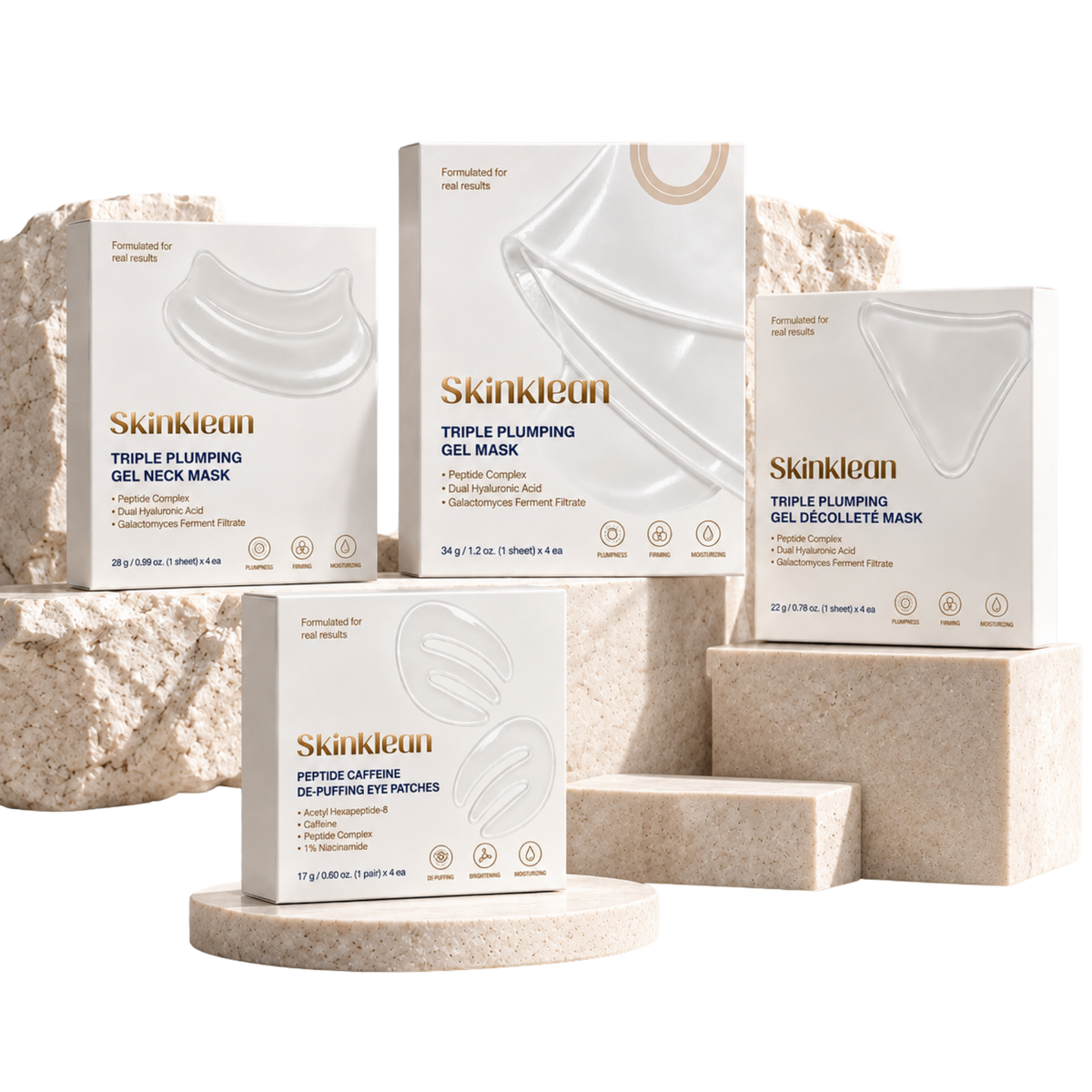
When we formulated our Triple Collagen masks, the goal was a short list that dry, sensitive, over-40 skin can live with for hours at a time. So there's no added fragrance and no colorants; the gel is white because that's the color of what's in it. The line is also free of parabens, sulfates, silicones and drying alcohols. It's preserved with ingredients such as hydroxyacetophenone and 1,2-hexanediol, and the full ingredient list is printed on every carton.
What we did put in is the part we're proud of: 11.76% hydrolyzed collagen, more than any other mask we know of, alongside 15% glycerin and two forms of hyaluronic acid. If you're looking for a treatment that respects a sensitive skin's short list, start with our Triple Collagen Plumping Gel Mask.