Let Your Skin Speak: How to Know Which Mask Your Face Needs
At 25, the question was "what's my skin type?" After 45, a better question is "what's changed, and where?" Skin doesn't age evenly. The under-eyes might look tired while your cheeks are still full, or your face might look great while your neck tells a different story. Learn to read those signals and choosing a mask stops being guesswork.
Start with a two-minute skin check
Do this with a clean, bare face, in daylight from a window, not under bathroom bulbs.
- The tightness test. Wash your face and wait ten minutes without applying anything. If it feels tight or looks flaky around the nose and mouth, your skin is short on water.
- The bounce test. Press a fingertip gently into your cheek for two seconds, then let go. Young skin fills back almost immediately. If the dimple lingers, your skin is losing firmness.
- The hand mirror test. Hold a mirror at your waist and look down into it, then hold it above your face and look up. The difference shows you where gravity and lost support are doing the most work.
- The still-face test. Relax your expression completely. Lines that only appear when you smile are expression lines. Lines that stay when your face is still are the ones to focus on.
Now take your answers zone by zone.
Your face: when lines and lost firmness are the message
What you might notice: foundation settling into lines by noon, cheeks that look less full than they used to, pillow creases that take longer to fade, and skin that feels tight after cleansing.
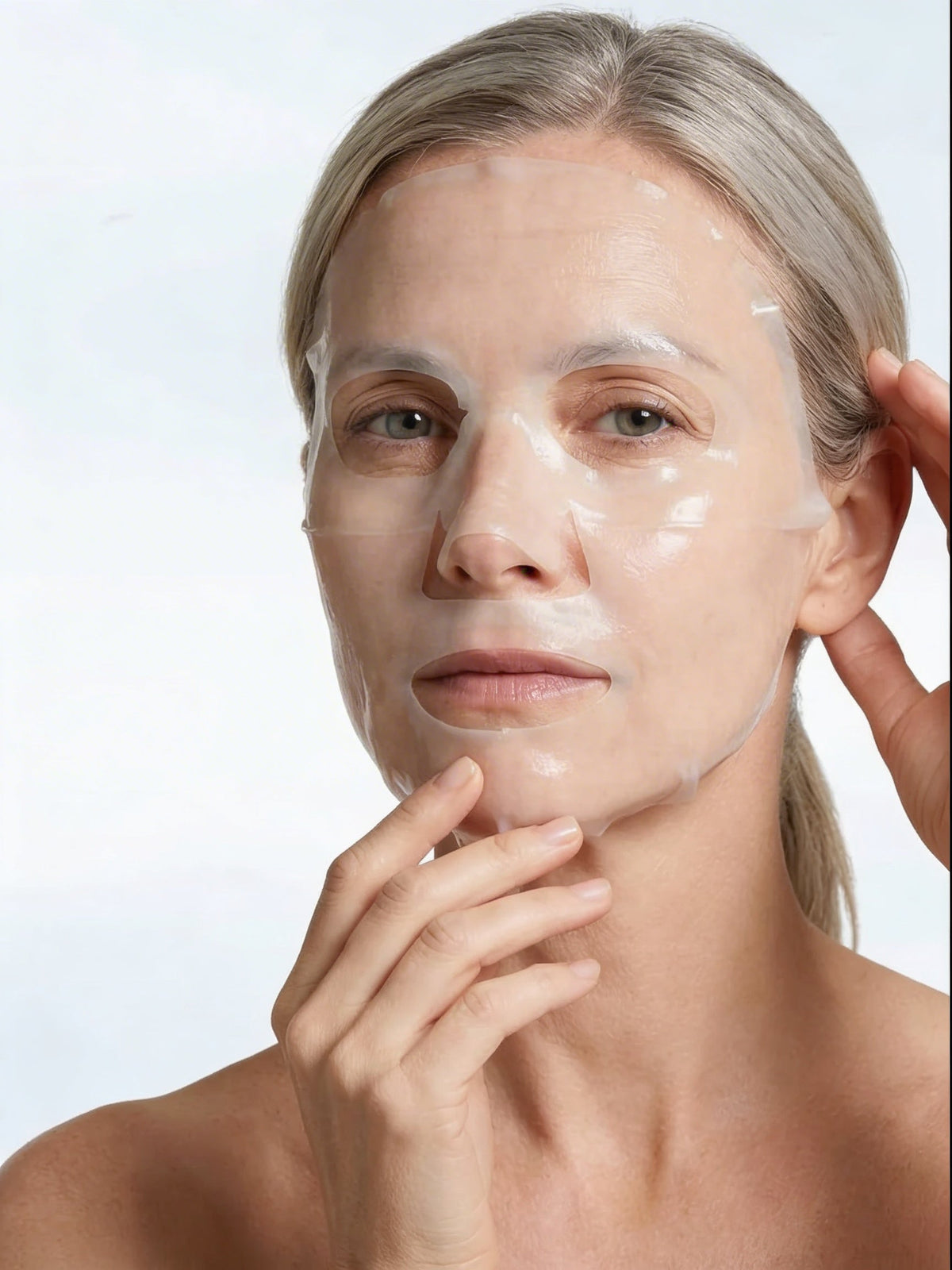
What it's asking for: deep hydration plus collagen support. This is the job of our Triple Collagen Plumping Gel Mask. It carries 11.76% hydrolyzed collagen, more than any other mask we know of, in three forms with three jobs. A soy collagen under 500 Daltons gets in and brings isoflavones with it. Human-identical Type III "baby collagen," grown by fermentation, is the collagen skin loses first. A collagen extract plumps the surface the same evening. Add 15% glycerin and two sizes of hyaluronic acid, wear it one to three hours, and three is the full treatment.
Your eyes: when you look tired even after a good night's sleep
What you might notice: morning puffiness, crepey texture under the eyes, and fine lines that concealer makes worse, not better.
What it's asking for: the under-eye area has some of the thinnest skin on your face and needs a targeted formula rather than a stretched-out face mask. Our Peptide Caffeine De-Puffing Eye Patches hold 17 grams of gel, work in 30 minutes, and combine caffeine for morning puffiness, acetyl hexapeptide-8 for the look of expression lines, and 1% niacinamide for a brighter, more even look. Place them under the eyes, never on the eyelids.
Your neck and chest: the areas that give age away
These zones have thinner skin, fewer oil glands, and far less attention than your face. Most women stop their creams and their sunscreen at the jaw, and years later it shows.
The neck
What you might notice: horizontal rings that deepen from looking down at phones and books, crepey texture, and softness under the jawline.
What it's asking for: the Triple Collagen Neck Mask, 28 grams of gel shaped to wrap the neck instead of a face mask awkwardly draped over it.
The décolleté
What you might notice: vertical lines between the breasts, especially if you sleep on your side, plus the dry, crepey look that decades of sun leave behind.
What it's asking for: the Triple Collagen Décolleté Mask, 22 grams of gel shaped for the chest, with the same collagen formula as the face mask.
SkinKlean tip: Repeat the bounce test once a month, same window, same time of day, and jot the result in your phone. Skin changes gradually, so a simple note is the most honest way to see what your routine is doing.
Listen again next season
Your answers won't stay the same all year. Winter heating and summer sun both pull water from skin, travel dries it out, and a stressful month can leave you looking tired in ways a calm one doesn't. Most women end up with a main mask and a supporting one: the face mask as the core ritual, with eye patches before big mornings or a neck mask added as the season demands. Re-check every few months and let your skin set the priorities.
Still not sure where to start? Our short skin quiz asks what you're seeing in the mirror and matches you with the mask your skin is asking for.