The Best Times of Day to Use a Hydrating Face Mask
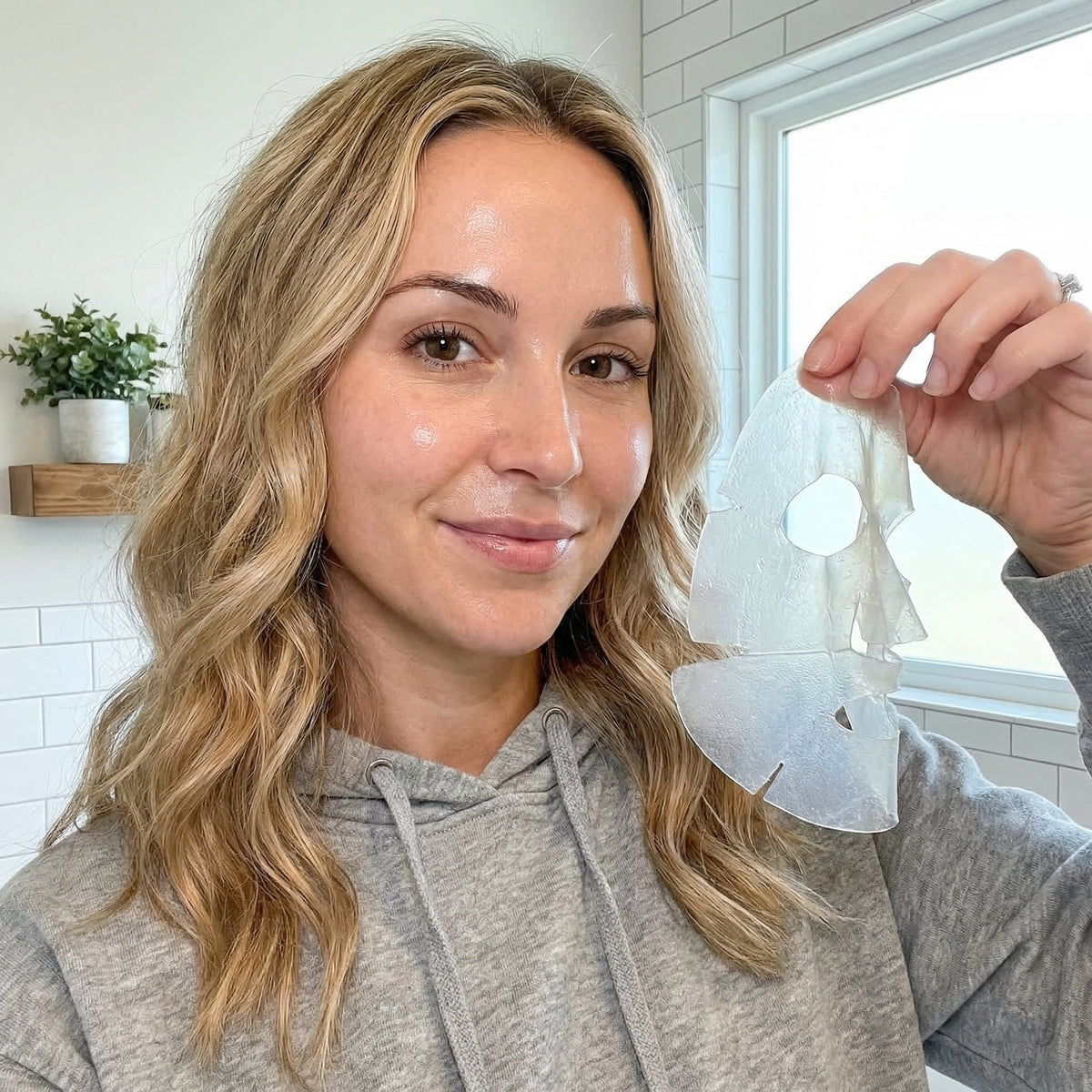
There's no single magic hour for a face mask. What changes through the day is the job you're asking it to do. In the evening, a mask is a full treatment. On the morning of a big day, it's a finishing touch. After a flight, it's a rescue. Match the timing to the goal and the same mask works harder for you.
The evening ritual: when to give your skin the full treatment
If you only mask at one time of day, make it the evening. Your skin runs on a daily rhythm. Research on skin's internal clock shows that its barrier lets more water escape in the evening and at night, while cell repair activity peaks while you sleep. Put simply, skin is thirstiest and busiest after dark.
That makes the evening the moment for a long, unhurried session:
- Cleanse gently and pat your face almost dry.
- Wear the mask one to three hours. Three is the full treatment, so putting it on after dinner and taking it off before bed fits most evenings perfectly.
- Massage in the leftover serum and follow with your moisturizer to lock it in.
If you fall asleep with it on, that's a bonus, never a requirement. Plenty of women get their best results from a simple 7-to-10 routine with a book or a favorite series.
The morning of a big day
A wedding, a reunion, a family photo. Mornings are when your face tends to look puffiest, because fluid settles under the eyes while you lie flat, and dehydrated skin makes foundation settle into fine lines by lunchtime.
A morning mask is about looking smooth and rested in the next few hours:
- Start with the eyes. Eye patches suit mornings best because they're quick. Our Peptide Caffeine De-Puffing Eye Patches are designed for 30 minutes, which is about one cup of coffee.
- Give your face an hour if you have it. Wear your face mask while you do your hair and choose your outfit.
- Let it settle. Press in the serum, wait a few minutes, then apply a light moisturizer and sunscreen before makeup. Well-hydrated skin gives foundation a smoother surface to sit on.
SkinKlean tip: For an event that really matters, split the work. Do the full three-hour face mask the night before, then use eye patches the next morning. The evening session plumps; the morning session de-puffs.
After a flight or a long day out
After travel
Airplane cabin air is famously dry, with humidity often far lower than most homes. A few hours in the air can leave skin tight, flaky around the nose, and noticeably more lined. When you arrive, wash off the travel grime, drink a big glass of water, and put on a hydrating mask for an hour or more while you unpack. It's the fastest way to stop looking like you've been on a plane.
After sun or wind
A day at the beach, the garden, or the ski slope leaves skin warm and parched. A cool mask helps it feel comfortable again and restores water that sun and wind pulled out. Keep the pouch in the refrigerator so it's ready when you get home. One caution: a mask is not a substitute for sunscreen, and on a real sunburn it's better to let skin calm down on its own first.
The in-between moments
Some of the best times to mask aren't tied to a clock at all:
- Heating season. Indoor heat dries the air for months. Add an extra evening session each week from November through March.
- A slow weekend morning. Coffee, the paper, and an hour with nothing else to do is an ideal full session.
- Stressful weeks. Poor sleep shows on your face first. A mask won't replace rest, but an hour sitting still with one on is a small form of rest in itself.
The best time is the one you'll keep
Timing fine-tunes your results, but consistency creates them. Pick the slot that fits your life, a few evenings a week, and anchor it to a habit you already have. Skin that's hydrated regularly holds its plumpness far better than skin rescued once a month. For the evening ritual, start with the Triple Collagen Plumping Gel Mask. It's made for the full one-to-three-hour session, and it comes with a 30-day money-back guarantee on your first order.